
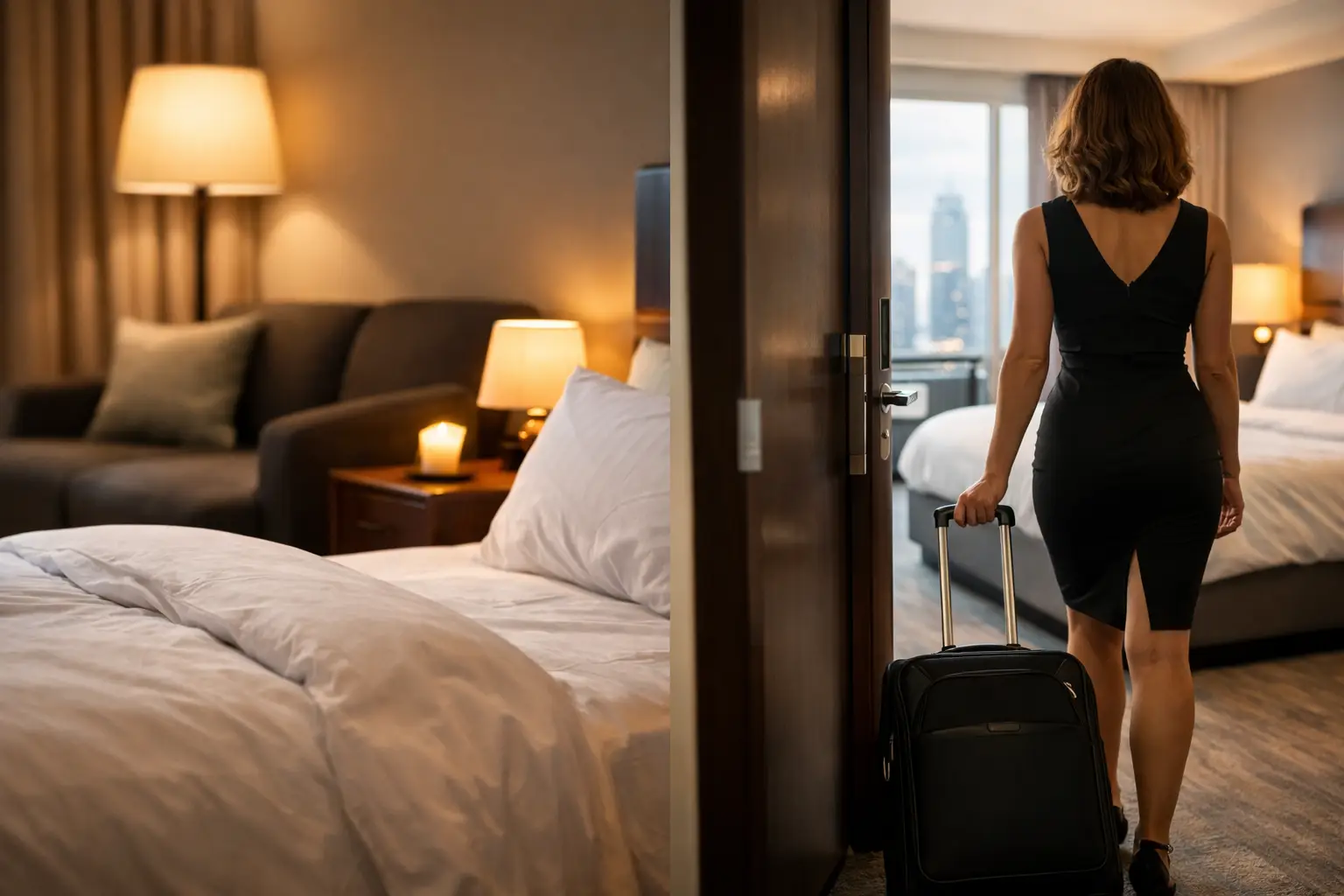
A private adult meeting can feel very different depending on the setting. When weighing incall or hotel outcall, the real decision is not just convenience. It is about privacy, control, hotel rules, travel time, personal boundaries, and whether everyone can communicate clearly before meeting.
For discerning adults in Kuala Lumpur and Petaling Jaya, a well-planned arrangement should feel calm, respectful, and straightforward. A premium experience begins with clear expectations, not last-minute confusion at a lobby, elevator, or unfamiliar address.
Incall or Hotel Outcall: What Is the Difference?
Incall generally means meeting at a private location arranged by the host. Hotel outcall usually refers to meeting at the guest’s hotel or another accommodation where the guest is staying. Both options can offer privacy, but they create different responsibilities for the person hosting and the person traveling.
An incall setting can provide more control over the space. The host may know the layout, access procedures, neighborhood, and building expectations. For a guest, this can reduce the stress of managing visitors at a hotel. However, traveling to an unfamiliar private location requires extra judgment. Confirm the general area, agree on arrival timing, and avoid sharing unnecessary personal details too early.
A hotel meeting may be more convenient for business travelers, visitors, and guests with a limited schedule. You already know where you are staying, and there is no additional ride across the city after a long day. Still, a hotel is not automatically a private free-for-all. Properties have guest registration rules, security procedures, visitor policies, and staff who may ask questions if something does not look right.
The better option depends on the individuals involved, the venue, the timing, and the level of comfort on both sides.
Privacy Means More Than a Closed Door
Privacy is often the first reason people consider incall or hotel outcall arrangements. Yet real discretion comes from preparation, not from assuming a room number or private address solves everything.
At a hotel, avoid discussing sensitive details in public areas. A busy lobby, restaurant, pool deck, or elevator is not the place for personal negotiations. Meet only after key expectations have been discussed privately and respectfully. If the hotel requires guests to register visitors, follow the property’s policy. Trying to bypass staff or security can create unnecessary attention and put everyone in an uncomfortable position.
At a private residence, discretion also requires basic care. Do not arrive far earlier than agreed. Do not linger outside the building, knock repeatedly, or draw attention from neighbors. A respectful arrival is quiet, punctual, and coordinated. If access instructions are unclear, ask once and wait for a response rather than improvising.
For either location, protect personal information. Keep work details, family information, passport data, banking information, and private photos private. Adults can be open about boundaries and plans without oversharing details that do not need to be exchanged.
Hotel Policies Can Change the Decision
A luxury hotel may feel like the obvious choice, especially for an overnight stay or a short city visit. But hotel class does not determine visitor policy. Some hotels permit registered guests to receive visitors with standard identification procedures. Others restrict unregistered visitors after certain hours, require an additional guest to be added to the room, or limit access to guest floors.
Before inviting anyone, check your reservation terms or contact the front desk with a simple question about visitor policies. You do not need to provide personal details beyond what the hotel requires. Knowing the rules in advance prevents awkward conversations in the lobby and avoids putting another person in a difficult position at check-in.
Consider the practical details, too. Is the hotel easy to reach by ride share? Is the lobby crowded at the planned time? Are elevators keycard-controlled? Is there a quiet place to meet without disrupting other guests? These details do not need to become a production, but they can determine whether a meeting begins smoothly or with avoidable friction.
Safety and Consent Come Before Convenience
The most polished plan is still a bad plan if either person feels pressured, uncertain, or unsafe. Consent should be clear, ongoing, and freely given. It can be withdrawn at any point, including after someone has arrived. A respectful adult accepts that immediately without argument, guilt, or persistence.
Talk through boundaries before meeting. Keep the conversation direct and calm: what each person is comfortable with, what is off-limits, what timing works, and whether alcohol or other substances are involved. Impairment makes communication harder and can blur consent, so it is wise to keep a clear head when meeting someone new.
It is also sensible to have a personal safety plan. Tell a trusted friend where you will be, arrange your own transportation, keep your phone charged, and make sure you can leave independently. These are not dramatic precautions. They are ordinary habits that support confidence and good judgment.
If anything feels inconsistent – changing names, unusual pressure, demands for sensitive information, threats, or a sudden shift in the agreed plan – pause. You do not owe anyone a meeting because messages have been exchanged or plans were discussed. Walking away is always an available option.
Communication Sets the Tone
The best private meetings are organized without endless back-and-forth. Confirm the date, approximate arrival time, location type, guest policy if relevant, and the preferred way to communicate upon arrival. A simple, respectful confirmation reduces misunderstandings.
Be honest about practical limits. A traveler may need to leave early for a flight. A host may have building access restrictions. A hotel guest may be unable to receive visitors after a certain hour. Raising these points early is more considerate than revealing them when someone is already on the way.
Avoid assumptions based on appearance, nationality, language, or social status. Kuala Lumpur is an international city, and guests may have different expectations around punctuality, privacy, drinking, and communication. Ask rather than guess. Clear communication is more attractive than forced confidence.
Local Laws and Venue Rules Still Apply
Private does not mean exempt from the law. Malaysian laws, local enforcement practices, immigration requirements, and hotel regulations can be complex. Do not assume that a private hotel room or residence makes conduct permitted simply because it is out of public view.
Travelers should also respect accommodation rules, local customs, and identification requirements. If you are unsure whether an arrangement complies with the law or a property policy, do not proceed until you have reliable clarification. No private meeting is worth creating legal, financial, or personal risk.
Respect for staff matters as well. Hotel employees, drivers, reception teams, and security personnel are doing their jobs. Treat them courteously, do not pressure them to ignore rules, and do not create scenes that affect other guests.
Choosing the Setting That Fits Your Plans
Choose an incall setting when the host is comfortable receiving guests, the location is familiar, access is clear, and both people prefer a controlled environment. Choose a hotel setting when you are a legitimate registered guest, the property allows visitors, travel convenience matters, and the meeting can happen without disrupting hotel operations.
Neither option is universally better. A quiet serviced apartment with clear building rules may be more practical than a crowded central hotel. A reputable hotel with transparent visitor procedures may feel more comfortable than traveling to an unfamiliar neighborhood. The right choice is the one where privacy, consent, legal compliance, and logistics all line up.
A little planning creates a better experience than any last-minute promise. Pick a setting where both adults can communicate clearly, respect the venue, maintain personal boundaries, and leave with their privacy intact.